
BERITA
04 Nov 2026, 09:05 AM
Rat Pests Threaten Agriculture; UMLA Lecturer Introduces Renewable Energy-Based Solution for Farmers in Sidomulyo
MedKomp
Admin Web
LAMONGAN – The persistent issue of rat infestations, which frequently threaten agricultural yields, has prompted a team of lecturers from the Universitas Muhammadiyah Lamongan (UMLA) to introduce a technology-based solution for the community of Sidomulyo Village, Deket District, Lamongan Regency.
Supported by a 2026 Regular Community Service Grant from the Ministry of Higher Education, Science, and Technology (Kemdiktisaintek), the team has launched a program titled “Empowering the ‘Makmur Mulyo’ Farmer Group through the Implementation of an IoT- and Renewable Energy-Based Rat Pest Mitigation System in Sidomulyo Village, Lamongan.”
The initiative is led by Mufti Ari Bianto, M.Kom., a lecturer in the Bachelor’s Program in Computer Engineering at Universitas Muhammadiyah Lamongan, with team members Dr. Rofiatun Solekha, S.Pd., M.Sc. (Universitas Muhammadiyah Lamongan) and Mala Rosa Aprilya, M.Kom. (Universitas Trunojoyo Madura).
The project is being carried out in collaboration with the “Makmur Mulyo” Farmer Group of Sidomulyo Village and has received support from the local village government, led by Village Head Bagus Dwi Saputra, M.Kom.
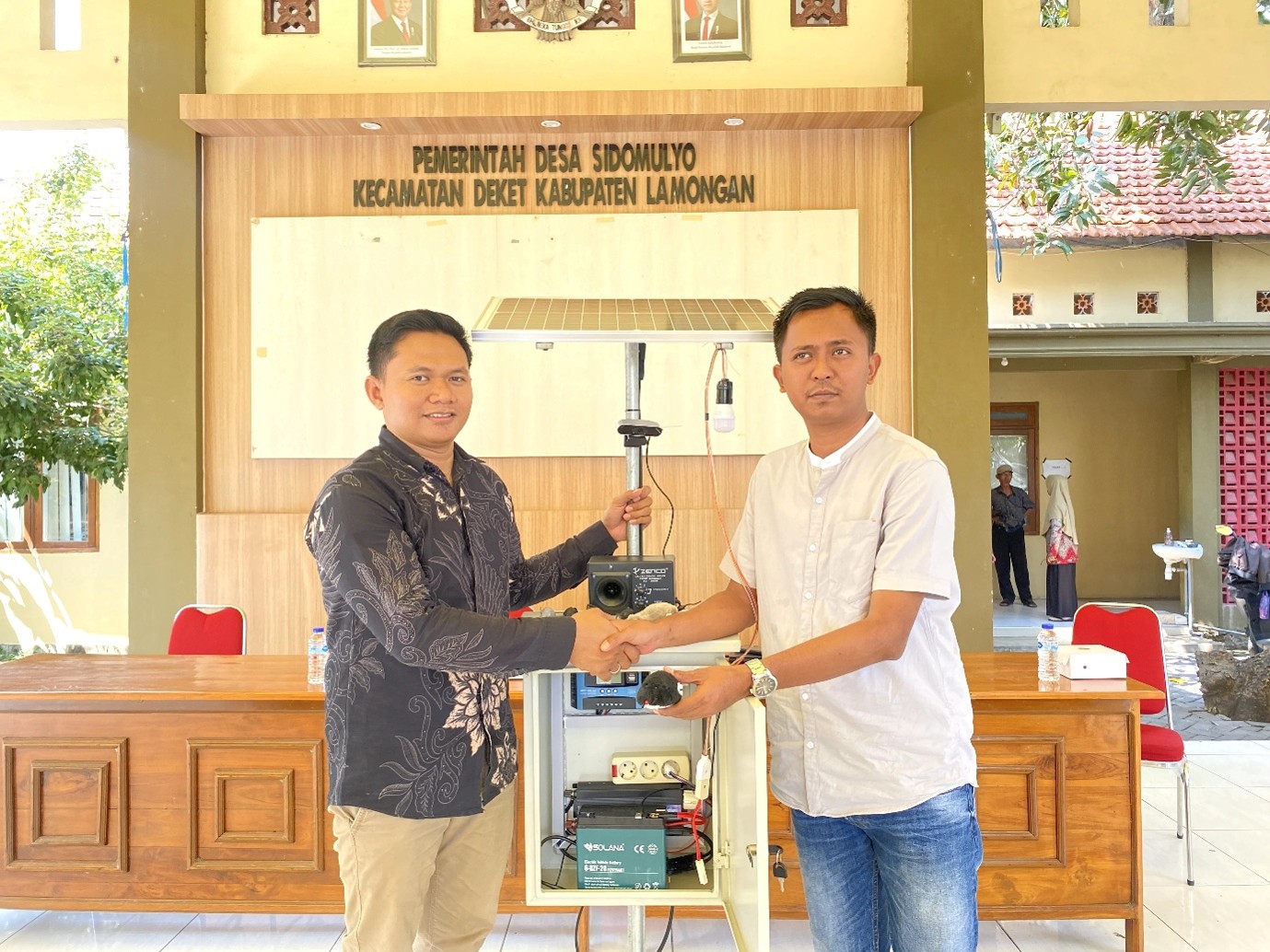
Addressing the Rat Pest Problem with Technology Sidomulyo Village is an area where many residents rely on the agricultural sector for their livelihoods. However, agricultural productivity faces various challenges—most notably, rat infestations, which can damage crops from their early growth stages all the way up to harvest time. Until now, farmers have employed various control methods, such as setting traps, hunting rats, or using specific chemical substances. Yet, these approaches have proven limited in terms of effectiveness, safety, and long-term sustainability. Through this program, the community service team is introducing an alternative rat pest mitigation system powered by renewable energy. The developed technology integrates smart electric fences, solar panels as an energy source, ultrasonic sound, and an AI-based sensor and detection system.
This approach is designed to make pest control safer, more selective, energy-efficient, and environmentally friendly, while simultaneously reducing reliance on chemical substances. “We want the technology we’ve developed to go beyond the university campus or a mere research outcome; we want it to be truly understood and utilized by the community. For this reason, we have carried out this initiative through outreach, training, and live demonstrations for farmer groups,” explained Mufti Ari Bianto, M.Kom., the team leader.
Great Enthusiasm from the Community The program was met with high enthusiasm by the residents of Sidomulyo Village. Participants engaged in sessions covering issues related to rodent pests and the use of renewable energy, followed by a demonstration of the proposed technology. The event was highly interactive, offering community members the opportunity to discuss the agricultural challenges they face and to see firsthand how rodent pest mitigation technology can be applied in a farming environment. For the community service team, public engagement is crucial; the successful implementation of any technology depends not only on the sophistication of the equipment but also on the community’s understanding, skills, and readiness to use it. Village Government Supports Program Sustainability The Head of Sidomulyo Village, Bagus Dwi Saputra, M.Kom., welcomed the implementation of this community service program. The village government expressed its appreciation and gratitude to the UMLA team and their university partners for bringing technological innovation to the community.
The Sidomulyo Village government also expressed hope that the initiative would not end with outreach and training, but would continue through ongoing guidance and further technological development tailored to the specific needs of the farmers. This aspiration serves as motivation for the community service team to continue fostering collaboration between the university, the village government, and local farmer groups. From Campus to More Sustainable Agriculture The empowerment program for the Makmur Mulyo Farmer Group serves as a tangible example of how higher education institutions contribute by providing science- and technology-based solutions to the community. By leveraging solar energy and smart technology, the team hopes to offer the community new alternatives for managing pest issues—specifically rat infestations—while simultaneously introducing the use of renewable energy to support the agricultural sector. The collaboration between UMLA, the University of Trunojoyo Madura, the Sidomulyo Village Government, and the Makmur Mulyo Farmer Group is expected to continue, ensuring that the innovations introduced can deliver broader benefits to the community. From Sidomulyo, it is hoped that these technological innovations will evolve into an integral part of an agricultural system that is safer, more self-reliant, environmentally friendly, and sustainable.